
THE RECIPES BEHIND THREE MASTERPIECES
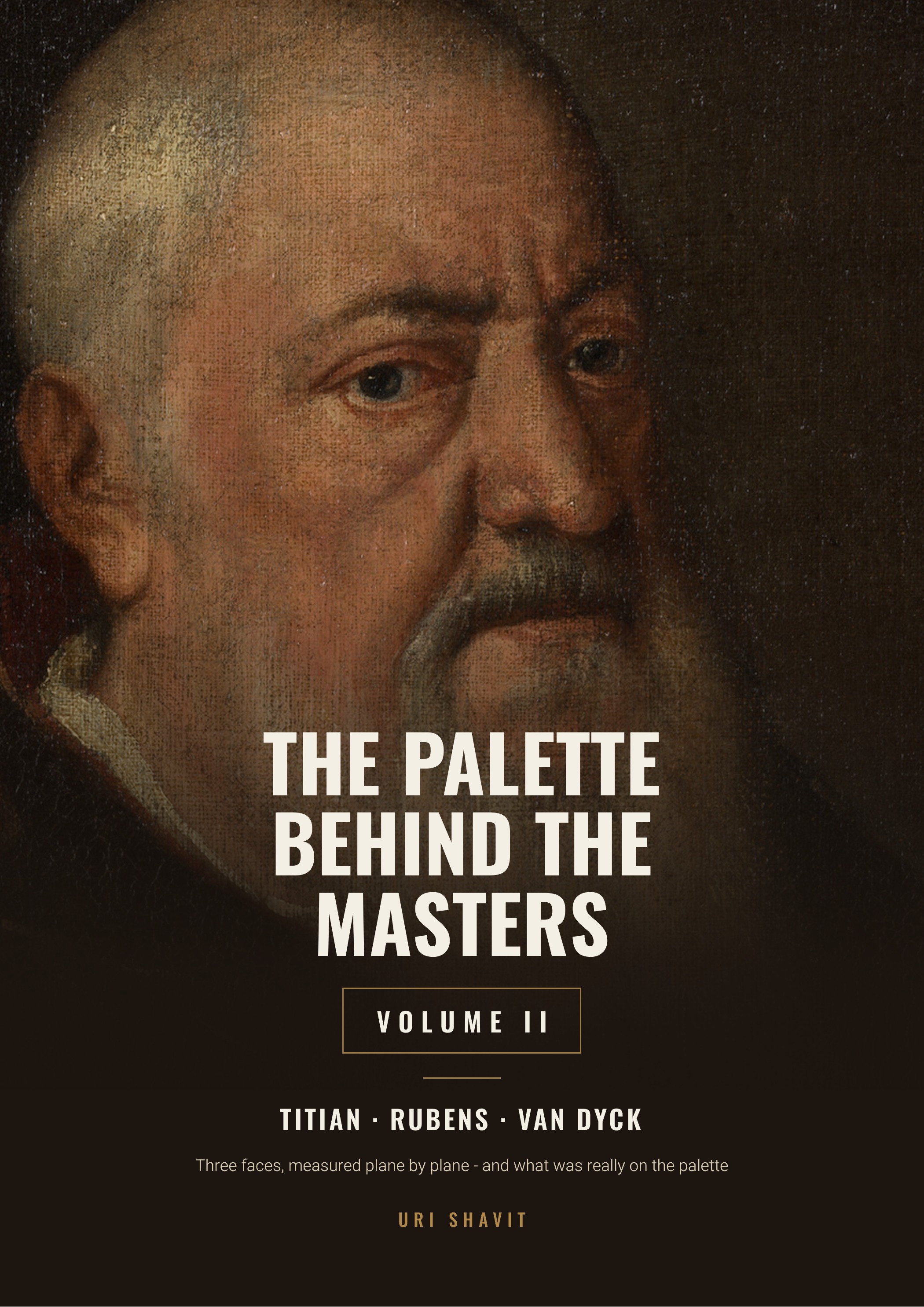
THE EXACT SKIN TONES INSIDE A TITIAN, A RUBENS, AND A VAN DYCK
Not color theory. Not a guess. Every color here is a literal pixel of the painting, sampled inside a mask I drew by hand so that no reading falls on a beard, a collar or a background - set beside what published conservation analysis says was actually on the palette.
$19.95
Instant PDF download
1
See the finished painting
2
Get the exact mixes I used to paint it
3
Mix them yourself at your easel
THIS IS NOT COLOR THEORY
It is a masterpiece measured, not described. For each of three paintings I show you every flesh reading sampled inside a mask drawn by hand, how to reach it with ten modern tubes, and - kept deliberately separate - what published conservation analysis says the painter actually had on his palette. The two do not fully agree, and that gap is the most useful thing in the book.
WHAT IS INSIDE
- 3 MASTERPIECES FROM THE METROPOLITAN MUSEUM - Titian's Archbishop Archinto, Rubens's portrait of his own family, and Van Dyck's self-portrait at twenty-one.
- 44 FLESH READINGS IN TOTAL - 13 to 18 per painting, each one a literal pixel sampled inside a hand-drawn mask so nothing lands on a beard, a collar, a crack or an impasto ridge.
- WHAT IS ON THE CANVAS NOW, AND WHAT WAS ON THE PALETTE THEN - the surviving surface and the documented pigments, kept on separate pages, with a plain note on what is lost in the swap and what cannot be reproduced at all.
- THE SAME TEN TUBES AS THE OTHER VOLUMES - between them they stand in for every pigment identified in these three paintings. No specialist colors.
- THE ONE FINDING THAT CHANGES HOW YOU PAINT SHADOW - not a single one of the 44 readings is cool, across a bald old archbishop, a toddler, and a twenty-one-year-old. Not one green shadow, not one blue halftone, not one grey turn.
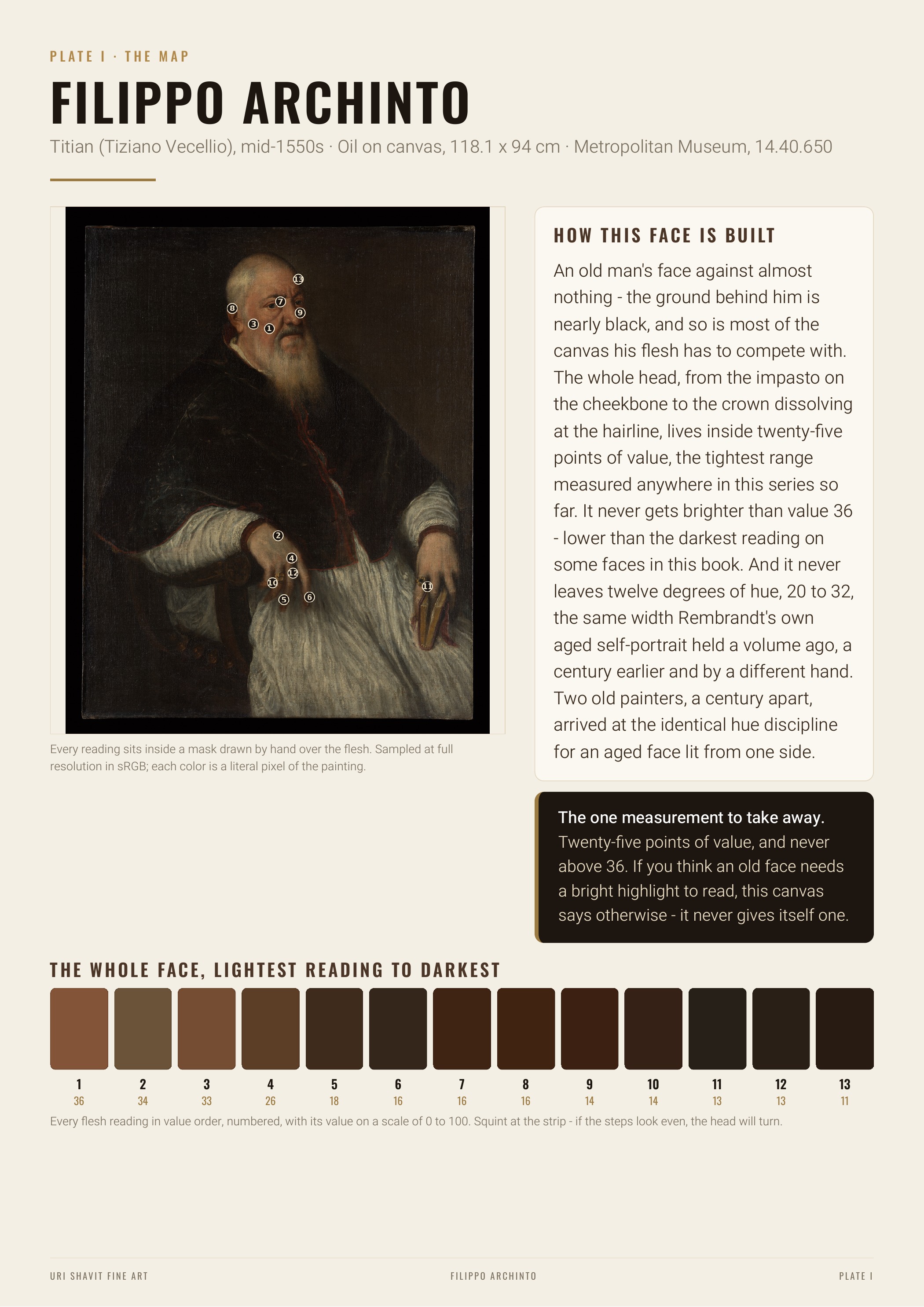
THE MAP - WHERE EVERY READING WAS TAKEN
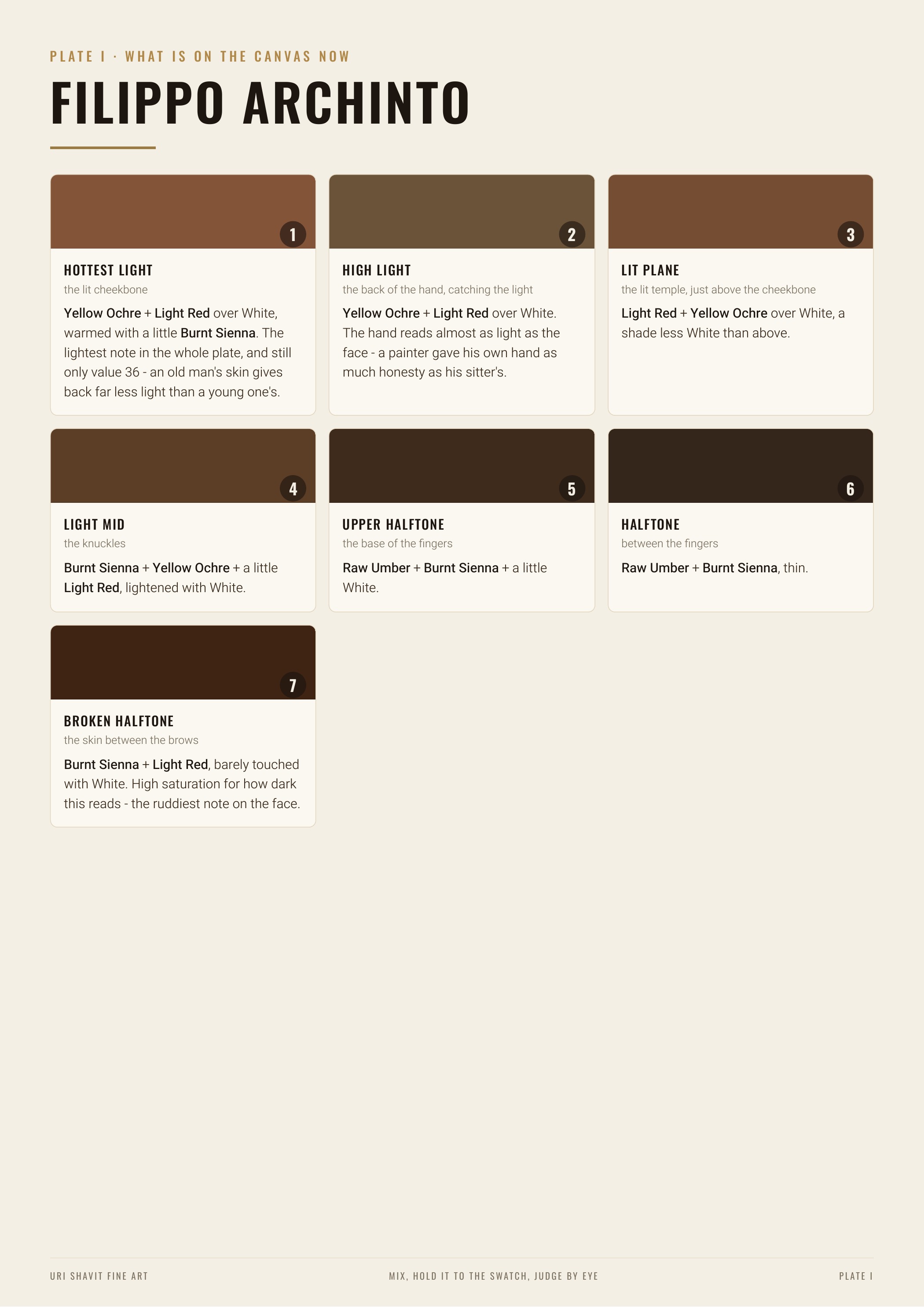
ON THE CANVAS NOW - THE MIX FOR EACH PLANE
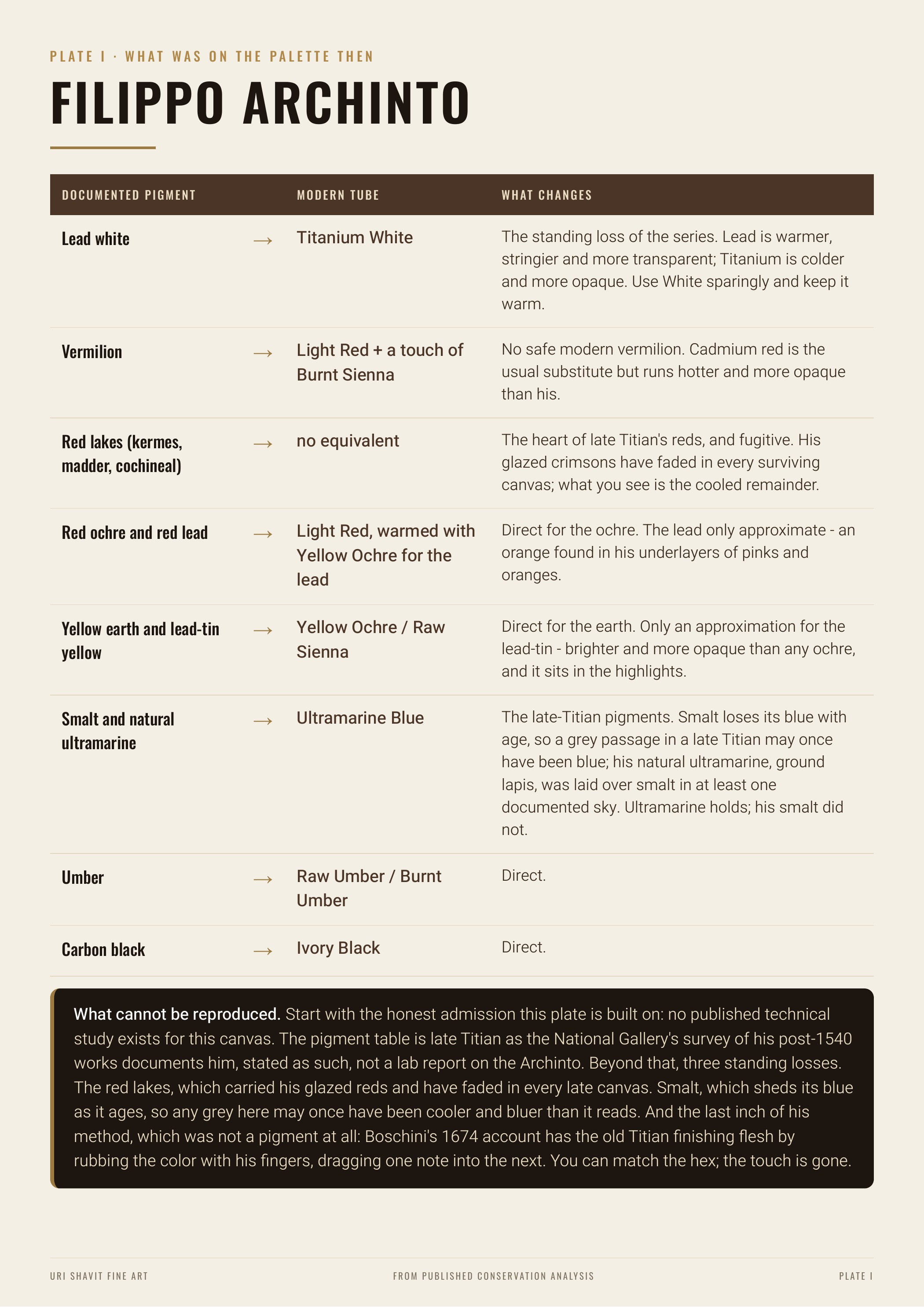
ON THE PALETTE THEN - THE DOCUMENTED PIGMENTS
WHO IS IT FOR
For the painter who has stood in front of a Titian and wondered how an old face can glow with no bright highlight in it. If you have tried to reverse-engineer a master's flesh from a museum photograph and ended up guessing, this is the measurement instead of the guess - a master, his heir, and his heir's pupil, measured under the same rules.
WHY TRUST IT
I am Uri Shavit, a classically trained oil painter. For over twenty years I have taught color - to a YouTube community of more than 134,000 painters and in my own studio. Every color in this book is a literal pixel of the painting, sampled inside a mask I drew by hand. Every pigment named comes from published conservation analysis, not from my opinion - traced for this volume to the primary literature, cited at the end of the book, with the one gap admitted in plain words on the plate where it exists.
Not a single flesh reading in either book is cool. Eighty-two measurements now, across six painters and more than a century of painting, and every one falls in the warm quadrant.
QUESTIONS
DO I NEED THE OTHER VOLUMES?
No. Each volume stands on its own. This one continues the Masters strand - the Portrait volumes open up my own paintings; the Masters volumes open up the museum's.
WILL IT ACTUALLY HELP MY PAINTINGS?
Yes, if your shadows keep going cool and your flesh will not turn. Forty-four readings across three masters say the answer is warmth and value, not a temperature shift.
WHERE DOES THE CONSERVATION DATA COME FROM?
Published analysis by museum conservation departments, not from me. Each plate names the documented pigments and maps each one to a modern tube.
WHAT PAINTS DO I NEED?
The same ten tubes as the other volumes (Michael Harding and Winsor & Newton, Series 1), or any comparable oils. Between them they stand in for every pigment identified in these three paintings, with the honest exceptions noted on each plate.
WHAT FORMAT IS IT?
A downloadable PDF, designed for a computer or iPad screen, not a phone. Instant download after purchase.
CAN I PRINT IT OR SHARE IT?
Print it for your own studio use. It is a personal-use license, so please do not redistribute or resell. The three paintings themselves are public domain under the Metropolitan Museum's Open Access programme.