
Lead White: The Only White the Old Masters Had

Every painting before the 20th century was built on it. Here is what it actually does, why a few painters still use it, and what to watch for if you open that tin.
The Toxic White Every Old Master Used
People say lead white is a relic - something dangerous that modern pigments have replaced and that you only reach for if you are a romantic who thinks suffering improves painting. I want to challenge that framing at the start. Lead white was the only white pigment available in appreciable quantities from antiquity through the 19th century. Every oil painting in every museum you have ever visited, if it was made before roughly 1850, was built on it. That is not toxin-chasing nostalgia. That is the plain history of the medium.
The carousel hook is honest: painters were risking their health. Lead poisoning is real, and I am not going to wave that away. But the more interesting question for working painters is what this pigment actually does that modern alternatives do not.
What Lead White Actually Is
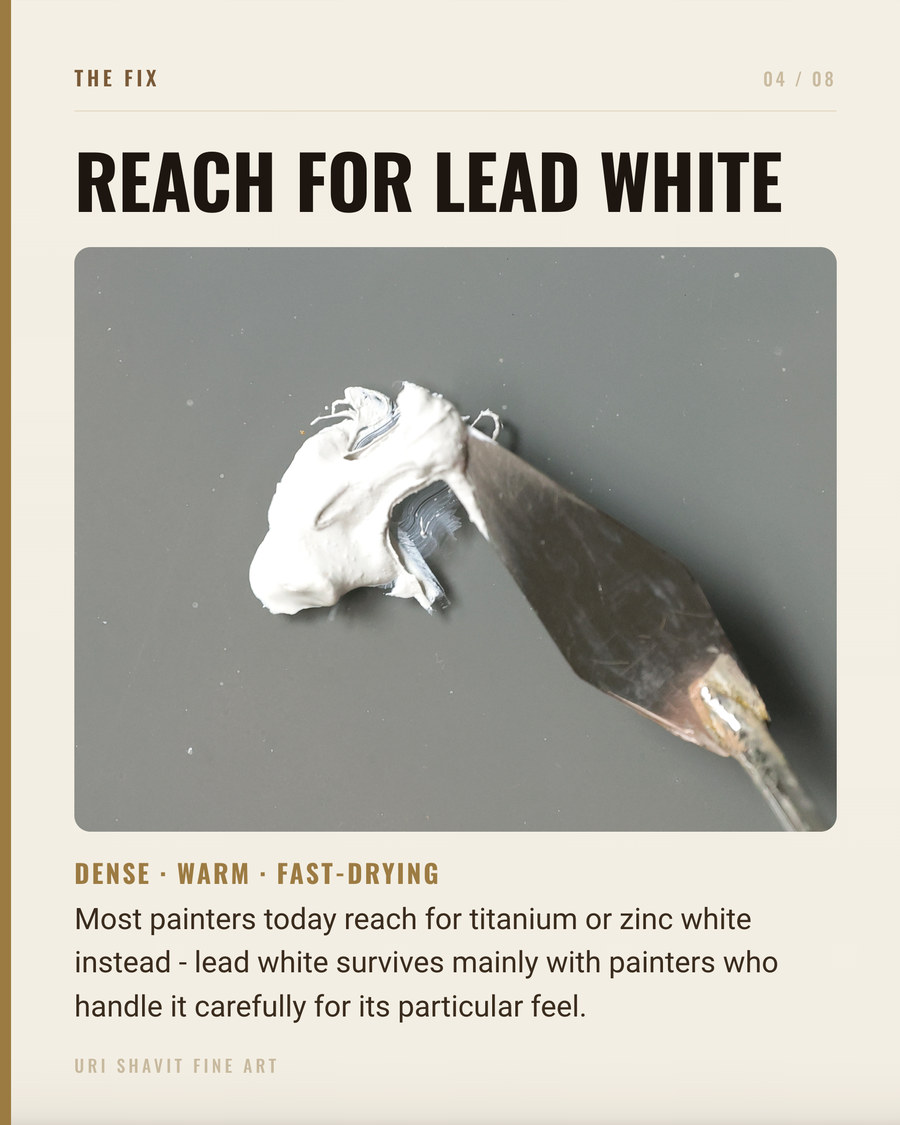
Lead white is Color Index Pigment White 1, chemical formula 2PbCO3·Pb(OH)2 - a basic lead carbonate with a density of 6.70 and a refractive index of 1.94-2.09. It is dense and opaque, and it needs very little oil to become a workable paste with high hiding power. Three properties separate it from titanium and zinc white. First, it is a siccative: it accelerates drying by catalysing cross-linking in the oil and forming lead soaps, so thick passages skin over faster than you expect. Second, the film it forms is exceptionally strong - Smithsonian researchers found lead white paint demonstrates ongoing chemical processes that increase its mechanical durability over years, where titanium white forms a flexible but weaker film. Third, its tone is warm. Compared with the cold blue-white of titanium, lead white has a creaminess that does not fight the earth pigments alongside it.
Handling is different too. It is what painters call "long" - slightly ropey, with pull on the brush. It builds impasto that holds a ridge. Titanium breaks shorter and buttery; easier to blend, but harder to sculpt.
When It Arrived - and There Was Nothing Before It
Lead white has been in use since at least the fourth century BCE. Theophrastus mentioned it; Pliny the Elder described it as used to paint ships. The ancient method involved exposing metallic lead to acetic acid vapor, which produced lead acetate; carbon dioxide from the atmosphere then converted that to basic lead carbonate. The 17th-century Dutch "stack" process refined this by sealing lead sheets in rooms with horse manure or tan bark for heat and additional carbon dioxide.
Here I want to be direct: there was no alternative. Zinc white did not become commercially available until the mid-19th century. Titanium white only reached artists in the 20th century. Every white passage in every Rembrandt, Vermeer, Caravaggio, or Venetian Renaissance painting is lead white - because there was nothing else. Discussing the Old Master palette without understanding lead white at its center is like discussing cooking without understanding salt.
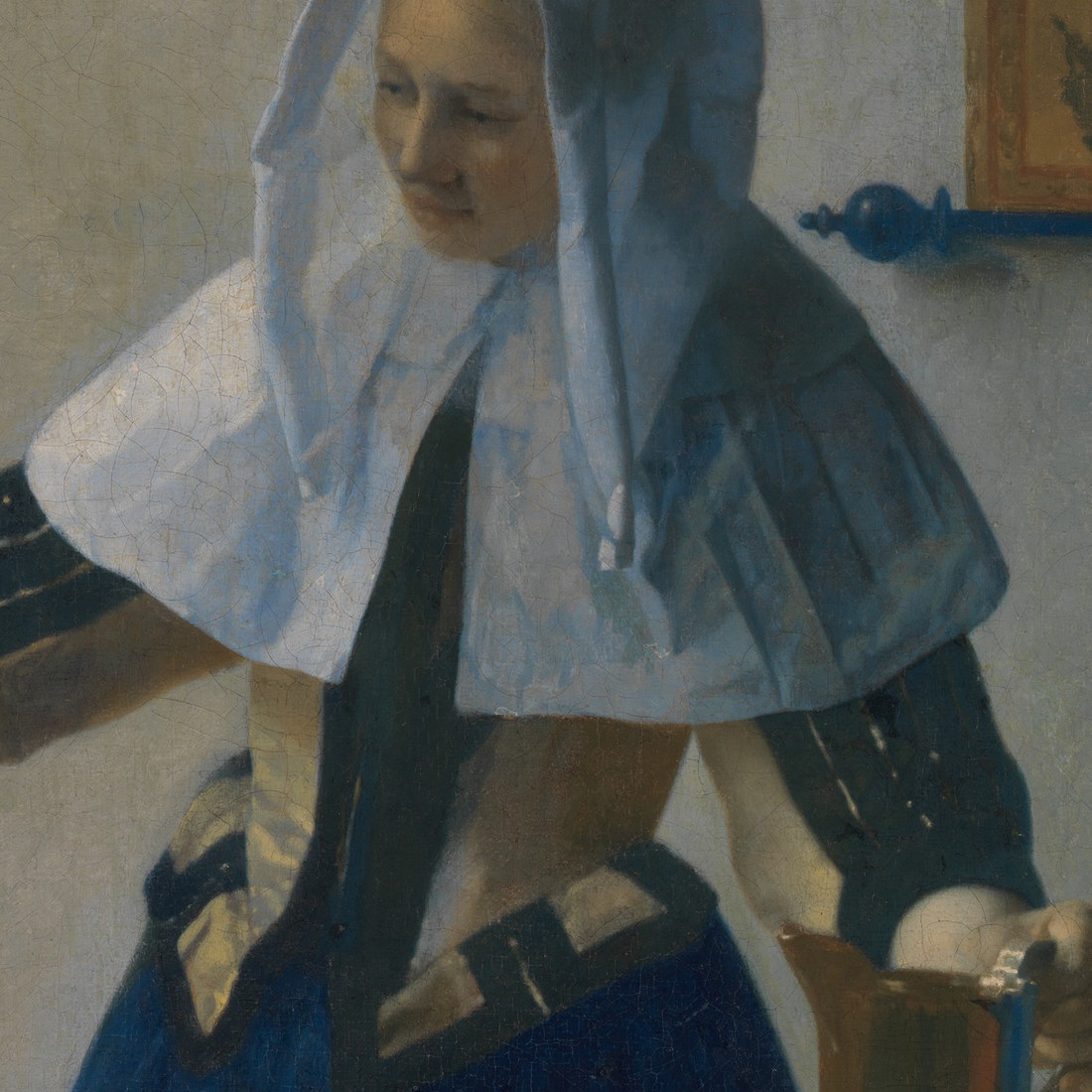
Rembrandt used lead white throughout his flesh tones, cuffs, and collars, combining it with lead-tin yellow in the warmest highlights. Caravaggio's limited palette - ochres, vermilion, lead-tin yellow, carbon black - relied on lead white as its sole light-pusher. The pigment shaped the entire working method, not just individual passages.
Its dominance ended for one reason: toxicity. In the United States, lead white in interior house paints was restricted in the 1950s and prohibited in 1978. The EU later restricted Winsor and Newton from selling it in tubes; from 2014 they could only sell it in 150 ml tins.
The Failure Modes
Increasing transparency over time. Lead white reacts with free fatty acids in the drying oil to form lead soaps - the same process that builds film strength also causes passages to grow more transparent with age. Underdrawings and pentimenti the artist fully covered can become visible decades later. You have seen this in museum paintings: the ghost of a repositioned arm, a compositional change showing through a sky. Keep your oil ratio low and understand that a solidly opaque passage today may not stay opaque in fifty years.
Blackening in sulfurous atmospheres. Hydrogen sulfide gas reacts with lead white to produce black lead sulfide. In old master watercolor drawings, lead white highlights have gone gray or nearly black for exactly this reason. In oil, the encasing paint film protects the pigment - centuries-old paintings have survived - but unvarnished passages remain at risk. Keep finished work varnished.
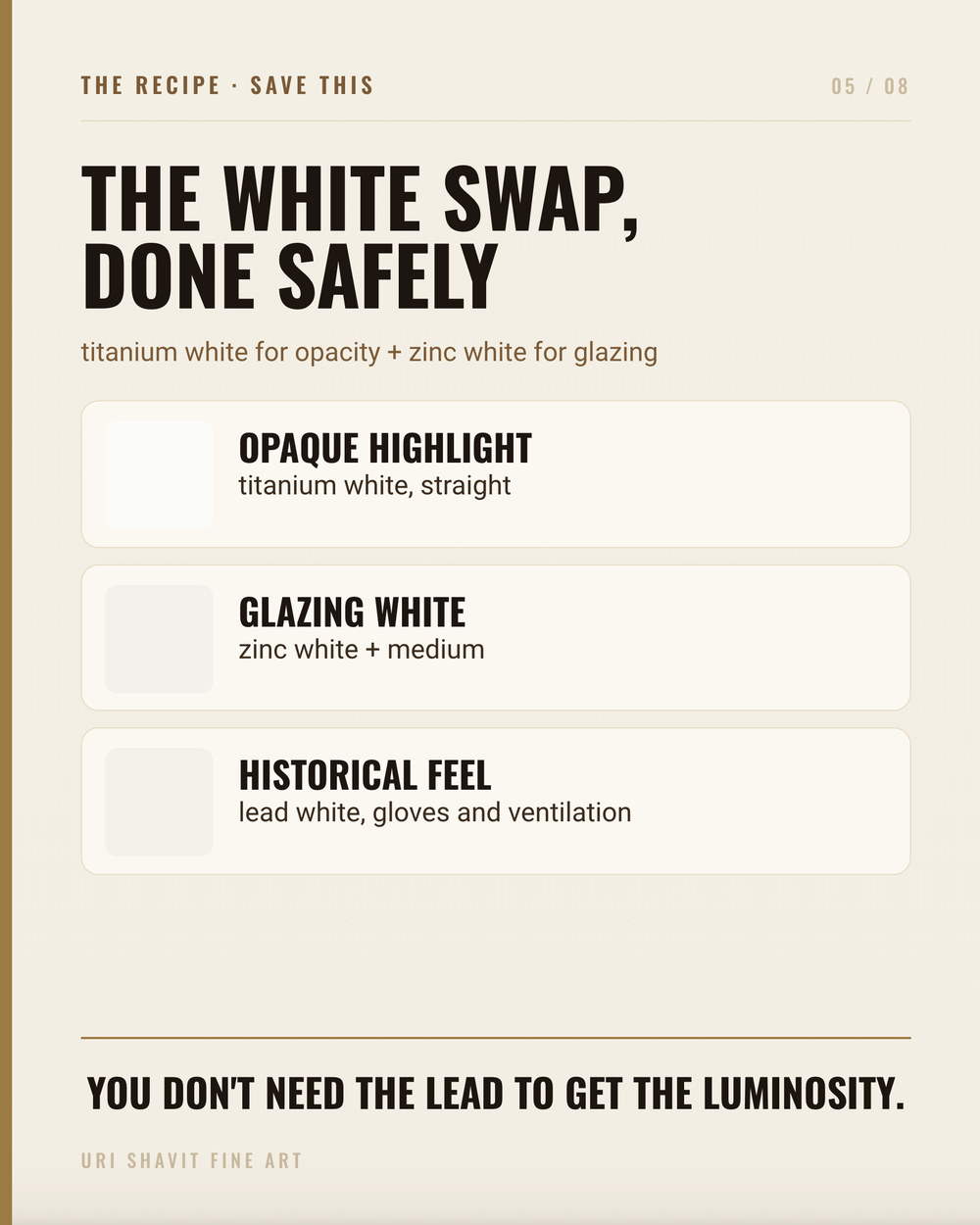
Trusting the tube label. Many tubes labeled "Flake White" or "Cremnitz White" today are not made by the stack process, contain zinc oxide as a bodying agent, and may include aluminium stearate as a stabiliser. Zinc oxide in oil paint becomes brittle in as little as three years when used in excess. "Flake White Hue" sold by manufacturers such as Gamblin is titanium dioxide, not lead carbonate - formulated to approximate the ropey handling but sharing none of the siccative chemistry or long-term durability. Read the full ingredients. If the pigment code is not PW1, you are buying a different product.
The Three Mixes That Matter
The basic flesh-light mix. Lead white with yellow ochre and a small touch of Venetian red is the starting point for lit skin in the earth-palette tradition. Roger de Piles documented exactly this in the 17th century: lead white as the sole white alongside ochre, Venetian red, madder lake, Italian sienna, green earth, umber, and bone black. The warm tone of the white harmonizes with all of these because it is not fighting them with a cool bias. Begin with a generous portion of lead white, add ochre to a mid-warm tone, then nudge with a very small amount of red. The mix reads luminous and never chalky the way titanium-based lights can appear.
The sky and cool atmosphere mix. Lead white with a small amount of ultramarine or cerulean is the traditional sky mixture. The ropey body makes it useful for wet-into-wet sky passages, and the warm undertone of the white softens what would otherwise be a hard blue, creating a sky that reads as light-filled rather than painted. Keep the blue proportion small - the opacity of lead white means color shifts happen faster than you expect.
The pure impasto highlight. In Rembrandt's late self-portraits, lead white is used nearly undiluted - loaded onto a brush or palette knife and placed in a single stroke to build literal three-dimensional relief on the canvas. The high body holds the ridge exactly where you put it. Use it straight or with a minimal touch of warm yellow, and do not rework the stroke. This is the application that titanium white approximates least convincingly.
The Honest Caveat

Lead white will not give you the cool, blazing brightness of titanium. If you need a clean neutral-to-cool white at full intensity, titanium serves that job better. Lead white belongs to a warm, tonalist palette, and it performs best inside that context. Also worth saying plainly: buying a tube labeled "Flake White" does not mean you are buying lead carbonate. Confirm the pigment code is PW1 and read what else is in the tube before you trust the label.
Go and Look Before You Mix
Before you squeeze any white onto your palette today, look at the white passages in any Old Master reproduction you have access to. The sleeve in a Rembrandt, the collar in a Velazquez, the linen in a Vermeer. What you are seeing is not design choice. It is what was available, used by painters who understood it completely. Then come back to your palette and ask whether the white you are using is working with the warm earth colors beside it - or simply overpowering them with cold tinting strength. That question is where lead white still teaches something worth knowing.
Get the free skin tone cheat sheet. Every mix in this article on one printable page, sent straight to your inbox.
Visit the Color Mixing Book Library for the three books this all comes out of.


Comments