
Transparent Red Ochre: The Earth That Glazes

Most red ochre is opaque. One version is not - and it changes everything about how you glaze warm darks.
The earth red that painters overlook
People hear "red ochre" and picture that flat, chalky, brick-red paint that sits on top of the canvas like a coat of primer. Opaque, dense, useful for underpainting - but not the stuff of a luminous glaze. So when someone lists "transparent red ochre" on their palette, the common reaction is: that is just a fancy name for the same old earth. It is not. The transparency is real, it is physical, and it completely changes what the pigment can do for you.
The carousel that goes with this post says "most red ochre is opaque - one version is not." That is the whole story in twelve words. What I want to do here is explain why they are not the same thing, when the transparent version arrived, how to use it, and what goes wrong if you do not respect what makes it different.
What transparent red iron oxide actually is
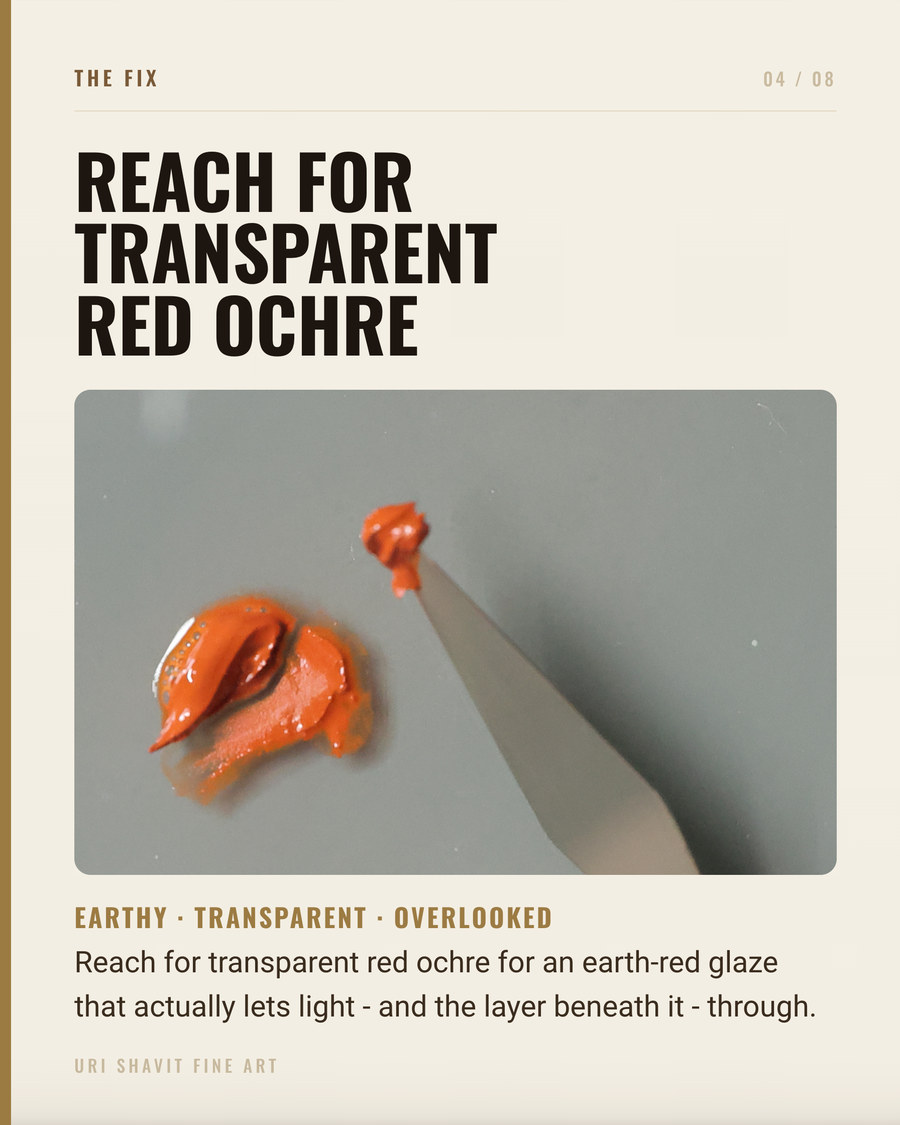
Transparent red iron oxide carries the Color Index name PR101. It is a synthetic iron oxide with the chemical formula Fe2O3 - hematite, the same chromophore that makes ordinary red ochre red. The chemistry is identical. What differs is particle size.
When hematite particles are reduced to 0.1 micrometres or smaller, they stop scattering visible light effectively. Instead of reflecting light back as an opaque surface, the film lets light pass through and bounce off whatever is underneath. That is transparency - engineered into the pigment, not added by a binder or resin.
In oil, PR101 reads as a warm yellowish-red, and in a glaze it produces tints noticeably cleaner and brighter than those from opaque mars red or venetian red. Mixed into white, the tint stays warm and orange rather than cooling to a chalky pink. That warmth retention is one of its most useful properties in flesh painting.
The practical catch is oil absorption. Ultra-fine particles mean enormous surface area, and the pigment soaks up 60-100 grams of linseed oil per 100 grams of pigment. Opaque red ochre absorbs only 20-25 grams. That difference has real consequences for glazing, which I will come back to. Drying rate is medium. Lightfastness is ASTM I - the highest rating - and it is non-toxic. On those two counts, no complaints.
One thing to know before you buy: "transparent red ochre" on a label may be either a synthetic ultra-fine PR101 or a naturally fine-grained red earth (PR102). Same chemistry, different consistency. PR101 is manufactured to a specification and behaves predictably. PR102 varies by geological source. The Color Index number is the only reliable guide to which one is in the tube.
Where it comes from historically
Red ochre is genuinely ancient. Hematite hand prints at Pech Merle in southern France date to 16,000-25,000 BC, and the pigment has been in use in Africa for over 200,000 years. By classical antiquity, the finest red ochre came from Sinop on the Black Sea - officially regulated, expensive, and sealed before export. The Italians called it sinopia.
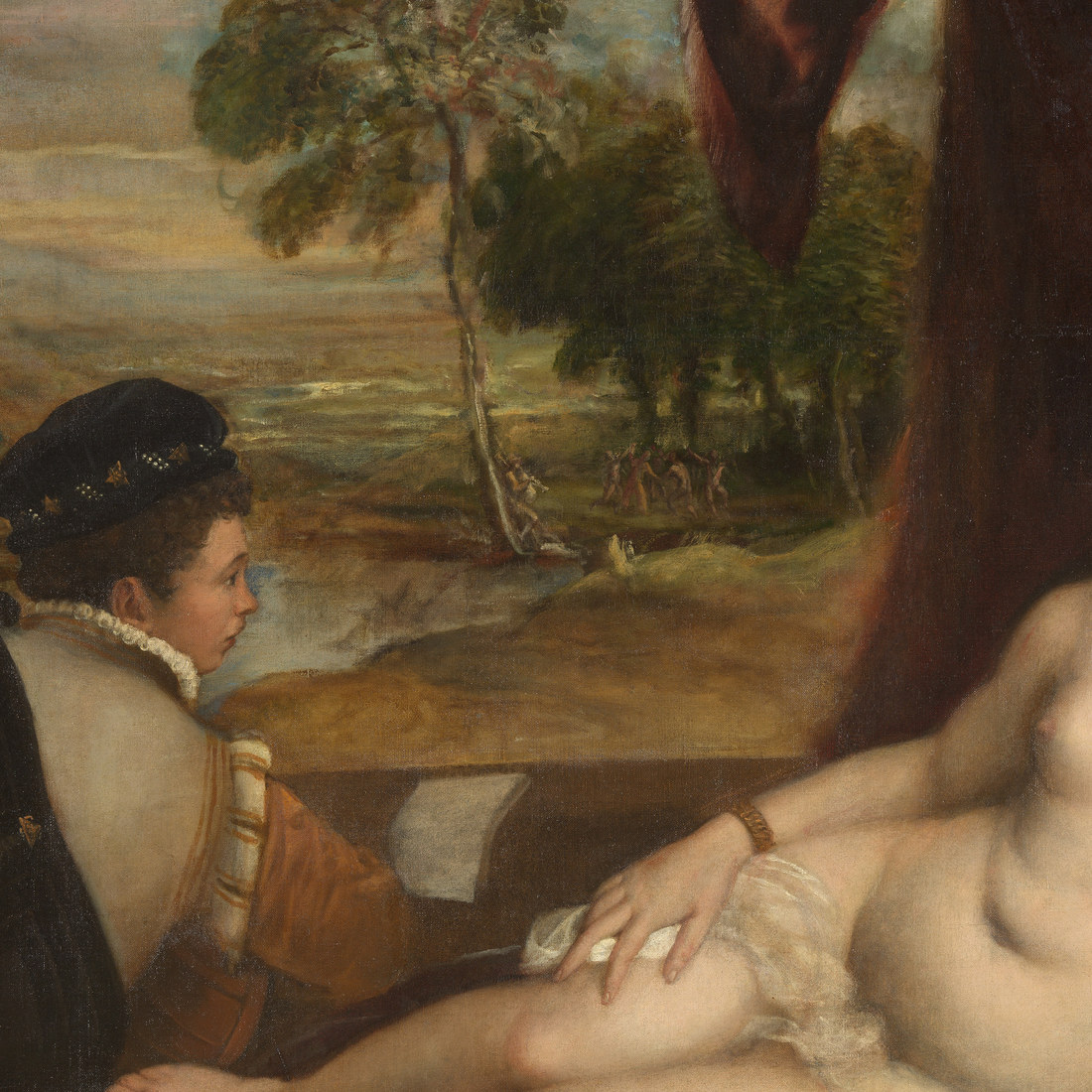
In the Renaissance, Cennino Cennini documented how red and yellow ochres functioned in panel painting and fresco. Palma Giovane, who watched Titian work, recorded something more specific: Titian blocked in his pictures with "pure red ochre" as his middle tone, then built lights with lead white and pushed darks with black and other colors. In the Met's Venus and the Lute Player (ca. 1565-70) - a canvas left unfinished in places - the red ochre ground breaks through in the thinly painted flesh, making it one of the clearest surviving demonstrations of the Venetian layering method.
Now here is what I want to say plainly: the modern synthetic transparent red iron oxide (PR101 at ultra-fine particle size) is a product of the late twentieth century, developed for the automobile industry. No Old Master used it. It could not have existed before submicron particle manufacturing was possible.
Before it existed, painters wanting transparency from a warm red had two options: naturally fine-grained ochre deposits - now largely exhausted, which is why today's earth paints are generally more opaque than historical examples - or organic red lakes such as madder and carmine. The lakes are transparent but most are fugitive. The third option was asphaltum, which is a disaster: it caused paintings to sink, wrinkle, and deteriorate so badly it fell out of serious use by the end of the eighteenth century. PR101 is the lightfast, stable answer to a problem that plagued painters for centuries.
The failure modes
Insufficient mulling destroys the transparency. Ultra-fine particles agglomerate - they clump. In a clump, they scatter light rather than transmitting it, and your glaze turns semi-opaque. Professional paint manufacturers use bead mills to break these agglomerates; you cannot replicate that with a palette knife. Give PR101 more time on the muller than you think it needs. If you are mixing it into a medium, work the paint out properly before it touches the canvas.
Adding extra oil to "open" the glaze is the wrong move. Tube paint made from PR101 is already oil-rich - 60-100 grams per 100 grams of pigment is a lot. Thinning further with raw linseed oil piles oil on top of oil. A glaze layer that is too oil-heavy can wrinkle as it dries, can yellow noticeably, and violates fat-over-lean if you paint over it later. Use a resin-oil medium sparingly and keep solvent additions moderate.
Confusing PR101 with PR102 produces inconsistent results across brands. Switching brands without checking the Color Index number may mean switching between a consistent high-tinting synthetic and a muted, variable natural earth - without knowing it. Tinting strength, oil absorption, and transparency can all differ significantly. Check the number before you reorder.
The three mixes that matter
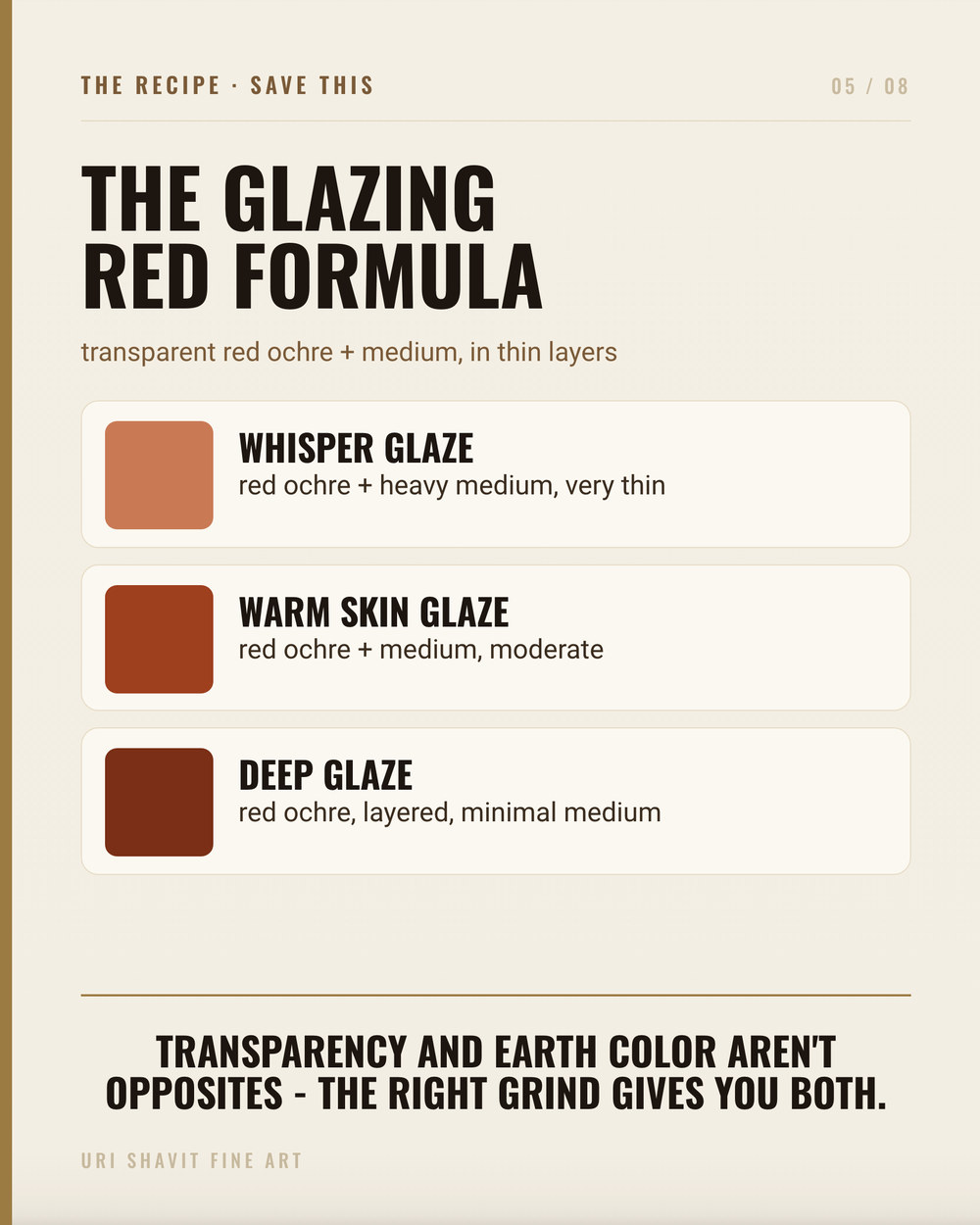
Warm skin tints that stay warm. Mix a small amount of transparent red iron oxide into titanium or lead white. The tints are a clean, warm orange-pink that does not cool and go gray the way opaque venetian red does when mixed with white. The tinting strength is high, so start with less than you think you need. This is the move when you need warmth in a light passage without the color going chalky.
The earth saturation upgrade. When a mixture of raw sienna, burnt sienna, or yellow ochre starts to look flat, a small addition of transparent red iron oxide tends to lift saturation rather than muddy it. Earth palettes can lose their life quickly when too many opaque pigments compete; the transparent iron oxide adds color strength without adding the opacity that is causing the flatness.
The transparent warm dark - a safe replacement for asphaltum. Mix transparent red iron oxide with phthalocyanine green. In varying proportions, this produces a range of deep, transparent warm browns - very dark, very rich, entirely lightfast. This is the modern answer to the problem that drove painters toward asphaltum and bitumen: a warm, transparent, deeply-valued dark glaze. Asphaltum destroyed paintings. This mix will not. Glaze it over a warm underpainting for depths that opaque paint cannot produce.
The honest caveat
Transparent red iron oxide will not replace an opaque earth when you need covering power. If a passage needs to sit solidly and read at full opacity, use mars red or venetian red instead. The transparency that makes PR101 valuable in a glaze is a liability when you need opacity - they are different tools.
One further note: the ASTM I lightfastness rating for PR101 comes from manufacturer testing. I was not able to locate an independent conservation science paper specifically testing PR101 in oil during my research for this post. The manufacturers' data is consistent and I have no reason to doubt it, but that is a distinction worth knowing.
What to do next
Find a painting you have been working on where the shadow side of a warm form looks flat or dead - a face, a piece of fruit, drapery in warm interior light. Mix a small amount of transparent red iron oxide into your medium, keep the glaze thin, and lay it over a dry passage in that shadow. Let it dry and look at what changed. One session of actual glazing with this pigment will teach you more about transparent earths than any description can.
Get the free skin tone cheat sheet. Every mix in this article on one printable page, sent straight to your inbox.
Visit the Color Mixing Book Library for the three books this all comes out of.


Comments